Backflow Installation in Kitsap County, WA
If your water provider has written to you about a cross connection, this is the job they mean. A to Z handles backflow installation throughout Kitsap, Mason, and Pierce County: reduced pressure zone and double check assemblies fitted, permitted, and set up so the certified tester who signs it off every year can actually get to it.
- Third generation in the trades
- Kitsap local. No ferry, no Narrows.
- Done right, Labor backed by a full year



- Third generation in the trades
- Kitsap local. No ferry, no Narrows.
- Done right, Labor backed by a full year
- Third generation in the trades
- Kitsap local. No ferry, no Narrows.
- Done right, Labor backed by a full year
- Third generation in the trades
- Kitsap local. No ferry, no Narrows.
- Done right, Labor backed by a full year
What Backflow |Actually Is|
Water Going the Wrong Way
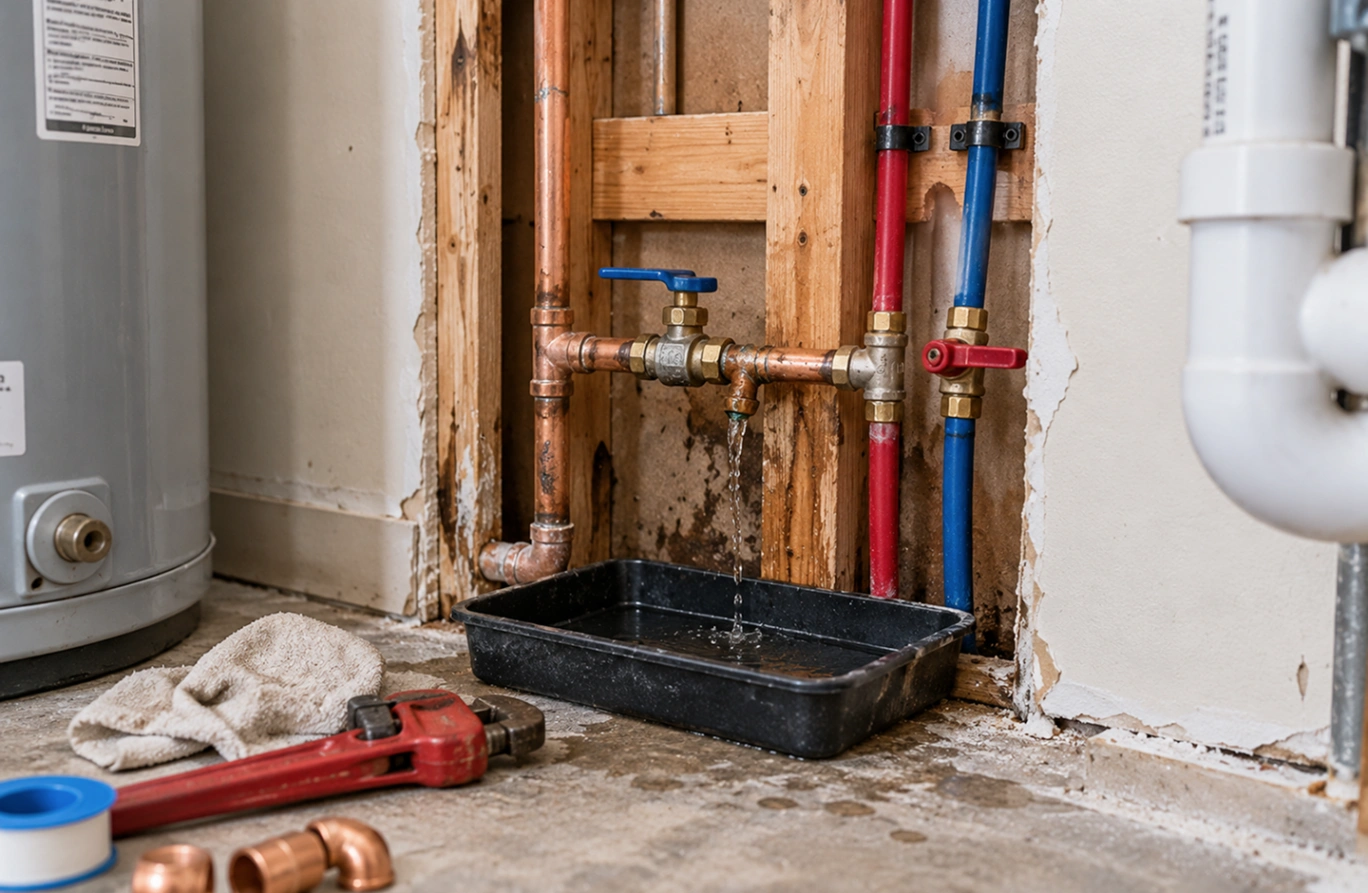
Your plumbing is designed to move water in one direction. Backflow is what happens when it goes the other way, pulling or pushing water from somewhere on your property back into the pipe that supplies drinking water.
A backflow assembly is a mechanical device that physically prevents it. There are several types, and which one you need is decided by what the hazard is rather than by preference.
Backsiphonage
This is the vacuum version. A water main breaks, a hydrant opens, or supply pressure drops sharply, and the sudden negative pressure siphons water backwards out of whatever is connected downstream. A garden hose left sitting in a pool, a bucket, or a puddle is the textbook example, and it is genuinely how contamination gets into supply lines.
Backpressure
This is the opposite: something on your side pushes harder than the supply. A pump, a pressurised irrigation system, or a heating loop can exceed supply pressure and force water back up the line. Both directions of failure are prevented by the same category of device, sized and chosen for the hazard involved.

What We Do and |What We Refer Out|
Installation Is Our Scope
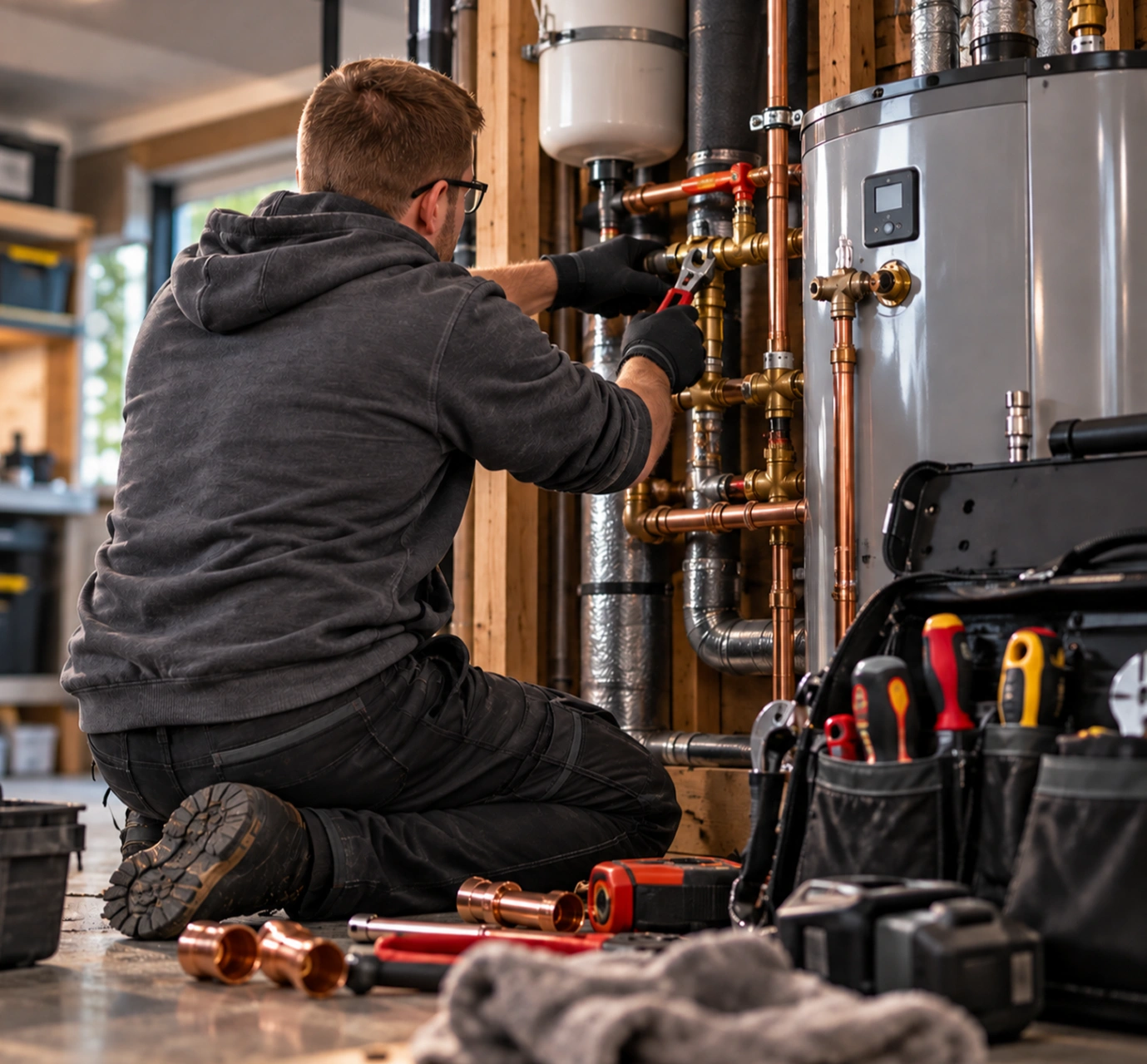
Fitting a backflow assembly is plumbing work and it sits squarely within Alex’s certification. New assemblies, replacements for failed ones, and relocating one that was originally put somewhere unserviceable are all jobs we take.
That last category comes up more often than you would expect, usually when an assembly has been fitted somewhere a tester cannot reach it with a gauge.
Annual Testing Is Not
Testing a backflow assembly requires a separate certification from the Department of Health, and we do not hold it. That is not a technicality we are working around, it is a different qualification with its own examination and its own renewal. We work with a certified tester who does hold it, and he does the annual test on assemblies we install.
There is a reasonable logic to that split. A tester’s job is to independently verify that a device works. Keeping installation and testing with separate people is a reasonable arrangement, and it means the person confirming your assembly passes is not the person who fitted it. We say this plainly because the distinction gets blurred often, and because you will need a certified tester every year regardless of who installed the device.

Cross Connections |We See Around Here|
Irrigation Systems
This is the most common reason a Kitsap homeowner gets the letter. An irrigation system sits in soil, and its heads can be submerged after rain or when a line is left charged. Add any kind of fertiliser or weed treatment injection and the hazard level rises immediately, which changes which assembly is required.
A Well and a City Connection on the Same Property
This one is genuinely local. Plenty of properties out in the unincorporated county have a private well, and some of those also have a municipal connection, whether from a later hookup or from a boundary shifting over time. An auxiliary water source on a property served by a public system is a classic reason a purveyor requires protection, because untreated well water reaching the public main is exactly what the rules exist to stop. Water filtration is a separate job, though the same properties often want both.
The Everyday Ones
Assembly |Types|
Reduced Pressure Zone Assemblies
An RPZ is the highest level of protection in common residential use. It has two check valves with a relief valve between them, and if either check fails, the relief port opens and dumps water to the atmosphere rather than letting anything travel backwards.
That relief discharge is exactly why an RPZ has to sit somewhere it can legally and practically drain, which drives most of the placement rules below.
Double Check Valve Assemblies
A double check is two independent check valves in series, used where the hazard is lower. It does not have a relief port, which makes it more flexible about placement, and it is frequently what a purveyor specifies for a straightforward irrigation connection with no chemical injection.
Vacuum Breakers
Pressure vacuum breakers and hose bib vacuum breakers cover specific situations rather than being general purpose. Which device your property needs is set by the hazard and by what your water provider requires, and that is a question with a correct answer rather than a preference.
Getting the |Installation Right|
Where an Assembly Can and Cannot Go
An RPZ cannot go in a pit or an underground vault. When that relief valve opens it discharges water, and an assembly sitting in a box that fills up can end up submerged, which defeats the entire point of the device. Above grade, with clearance underneath and a route for discharge, is the requirement.
Serviceability matters as much as compliance. A tester has to reach the test cocks with a gauge every single year. An assembly crammed behind a shrub or tight against a wall turns a twenty-minute annual visit into an argument, and eventually into a request to move it.
Freeze Protection
Above grade in this climate means thinking about winter. An assembly needs to be protected or drained before a hard freeze, because a cracked check body means a failed test and a replacement rather than a repair. Insulated enclosures handle it, and knowing how to drain yours down is worth five minutes at installation.
After It Is |Installed|
Your Annual Test
Most water purveyors require a certified test every year, and they will typically write to you when it is due.
We hand you off to the certified tester we work with, or you can use any certified tester you prefer. The result goes to your water provider rather than to us, which is how it should be.
What Comes With a New Assembly
A full year on parts and labor, permits where required, and an assembly positioned so next year’s test is uneventful. Assemblies fitted in Silverdale, Port Orchard, Poulsbo, Belfair, and out to Gig Harbor. Whatever is on the deals page applies here too.
What Kitsap Says: "Wish We'd Found You Sooner"
See what homeowners around Kitsap have to say about working with Alex and the A to Z team.

A to Z plumbing is by far the best plumbing company out there. They are so fast to respond to your issues. They are reasonably priced and won’t charge you for things you don’t need. 100% recommend.

August 23, 2023

Alex and Michael have done outstanding work on three different plumbing issues. They respond quickly to scheduling work, show up on time, and work efficiently. They are very knowledgeable about each issue I presented. They quote pricing up front so there are no surprises. They are fair in their pricing. They are friendly and always leave a clean work area. I would highly recommend A to Z Plumbing. I know we will ALWAYS call them for any plumbing needs.
July 17, 2024
Great customer service, quality workmanship and Alex is just a great guy to work with.
August 8, 2026
My husband and I are very pleased with Alex’s work. He is very professional and trustworthy We enjoyed working with him. We will definitely use him again and be happy to refer him and his company to anyone looking for a reliable and service-oriented plumber!
September 9, 2025
Alex and Tanner were amazing! We had an interesting, and I would say challenging, situation that needed to be addressed in several ways. They were both professional and competent. Alex returned messages and calls promptly, and addressed all the hiccups we encountered quickly. He is a kind and honorable person – we are SO glad we called A to Z plumbing, and will absolutely call them for all our plumbing needs!
September 9, 2025
10/10 Would recommend. A to Z plumbing came out to repair a busted water main for me as an emergency service. Alex and his team arrived within 15 minutes of my emergency and remained cool, calm and collected. They worked together to solve the problem quickly and efficiently. They were knowledgeable and professional from start to finish. I couldn’t be happier with their service and I will be using them again for future plumbing related services. A to Z plumbing had clear pricing that was consistent with their industry. If you want something done right, don”t do it yourself. Just call A to Z plumbing and enjoy your peace of mind.
March 9, 2026


Questions Homeowners Ask Before We Come Out
Do you test backflow assemblies?
No. Testing requires a Department of Health tester certification, which is separate from a plumbing certification and which we do not hold. We install assemblies and we work with a certified tester who carries out the annual test. If you only need a test, you need him rather than us, and we are happy to point you his way.
Why has my water provider told me I need one?
Usually because something on your property has been identified as a cross connection, and an irrigation system is the most common trigger. Auxiliary water sources such as a private well, and any system that injects chemicals, also prompt it. The letter normally specifies what level of protection is required, and that determines which assembly gets fitted.
What is the difference between an RPZ and a double check?
An RPZ has a relief valve between its two checks that dumps water to atmosphere if either check fails, which makes it suitable for higher hazard situations. A double check has no relief port and is used where the hazard is lower. The relief discharge is also why an RPZ has stricter rules about where it can be installed.
I have a private well and a city water connection. Does that need protection?
Very likely, and it is worth checking rather than assuming. A property with its own water source alongside a public connection is a standard reason a purveyor requires backflow protection, because untreated water reaching the public main is precisely what the requirement exists to prevent. Your water provider will confirm what they need.
Can an RPZ go in an underground box?
No. The relief valve discharges water when it operates, and an assembly sitting in a vault that fills with water can end up submerged, which defeats the device entirely. RPZ assemblies go above grade with clearance underneath and somewhere for the discharge to go.
Will it freeze out there in winter?
It can, if it is not protected, and a frozen assembly usually means replacement rather than repair. An insulated enclosure handles most situations here, and for a seasonal irrigation connection the simpler answer is draining it down before the first hard freeze. We will show you how at installation.