
Leak Detection in Kitsap County, WA
The expensive part of a hidden leak is rarely the pipe. It is the drywall, the flooring, and the framing that got wet for three months while nobody knew. Water leak detection and repair for houses throughout Kitsap County, Mason, and Pierce: we narrow it down to a location before anything gets cut, then fix the pipe and tell you honestly whether it is going to happen again.
- Third generation in the trades
- Kitsap local. No ferry, no Narrows.
- Done right, Labor backed by a full year



- Third generation in the trades
- Kitsap local. No ferry, no Narrows.
- Done right, Labor backed by a full year
- Third generation in the trades
- Kitsap local. No ferry, no Narrows.
- Done right, Labor backed by a full year
- Third generation in the trades
- Kitsap local. No ferry, no Narrows.
- Done right, Labor backed by a full year

Signs You Have a |Hidden Leak|
The Water Bill That Jumped
A bill that climbs while nothing about the household changed is the most common way a hidden leak announces itself. A pinhole you cannot see or hear will still run continuously, and continuous is what makes a small leak expensive.
If the bill moved and nothing else did, that is worth a call before you go looking for another explanation.
Ceiling and Wall Stains
A ceiling water stain is almost never directly under the leak. Water travels along framing, along the top of drywall, and down the outside of a pipe before it finds somewhere to drop through. That is exactly why guessing at the source and cutting there tends to produce two holes instead of one.
Staining that grows, or a patch that keeps coming back after a repaint, means the source is still active.
Sounds, Smells, and Warm Spots
Running water with every tap shut off is the clearest sign there is. Beyond that: a musty smell in one room, a warm patch on a floor where a hot line runs beneath, unexplained dampness in a crawl space, or a section of lawn staying green through a dry stretch when the rest has given up.
Where Leaks Hide |in Kitsap Homes|
Under the House Rather Than Under a Slab
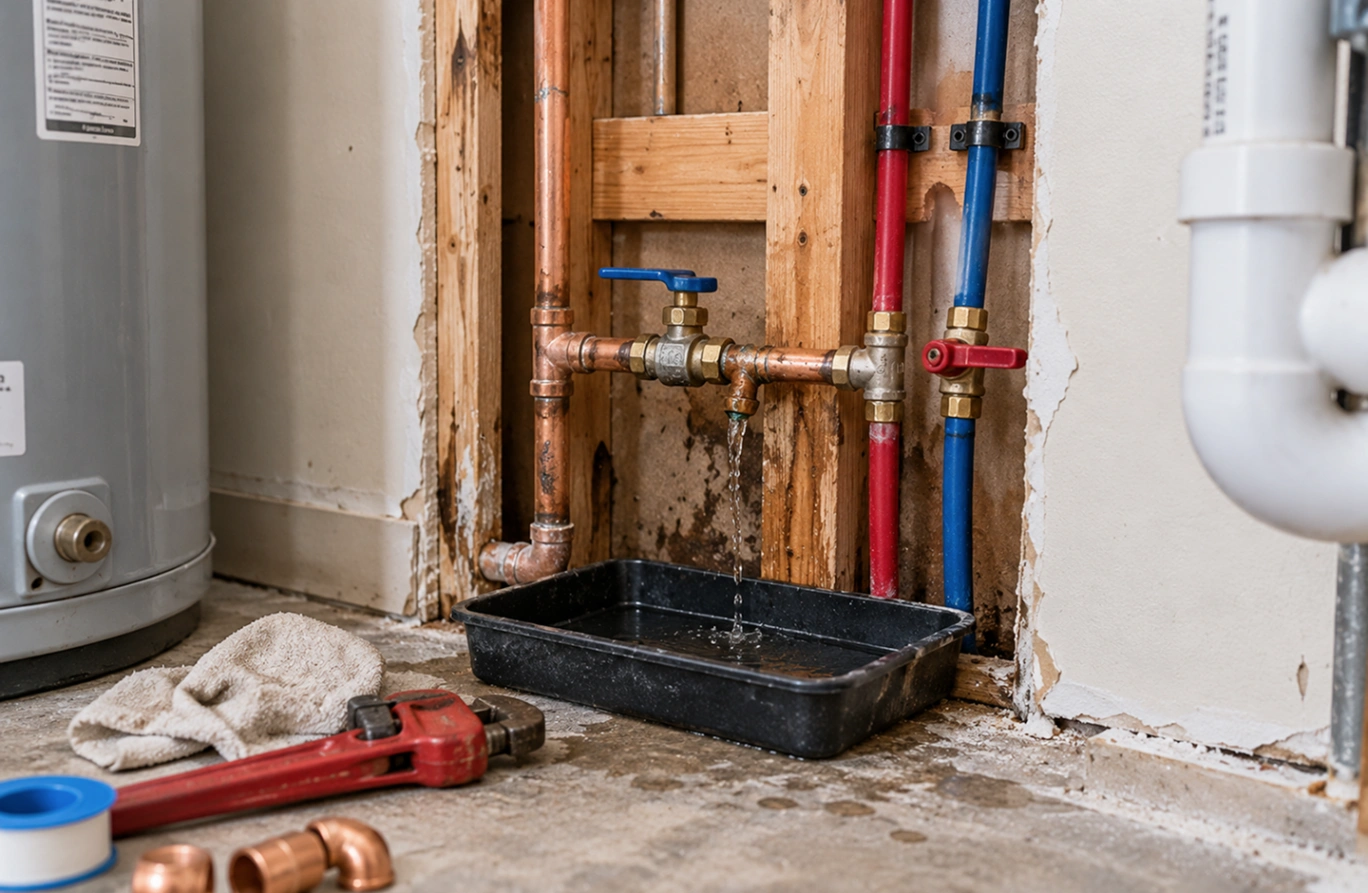
Most leak advice online is written for slab-on-grade country, and this is not that. A large share of housing here sits over a crawl space or a daylight basement, which changes the picture completely. A supply line can drip into a crawl space for months without a single visible symptom upstairs, and the first sign is often the bill or a smell rather than a stain.
The upside is that a crawl space leak is usually far easier to reach and repair than a leak under concrete. The downside is that nothing forces you to notice it.
Slab Leaks When You Do Have a Slab
Slab-on-grade construction does exist here, in some post-war builds, in additions, and under garages. A slab leak shows up as a warm floor patch, an unexplained damp spot, or the sound of water with everything off. These need locating precisely, because the cost of being approximately right is a larger hole in a concrete floor.
In the Walls and Ceilings
Wall leaks tend to come from joints, fittings, and old solder rather than mid-run pipe. Bathrooms above living space are the classic location, and a shower pan or a supply connection behind tile can run for a long time before it reaches a ceiling below.

Why Pipes Leak |Around Here Specifically|
Well Water and Pinholes in Copper
Aggressive water eats copper from the inside. Across much of unincorporated Kitsap, houses are on private wells drawing water that is naturally acidic and low in alkalinity, and that chemistry is a documented driver of pitting corrosion in copper pipe. Pitting produces pinholes, and pinholes rarely arrive alone.
City water customers are in a different position. Bremerton treats its supply for corrosion control specifically so the water does not attack household plumbing, which is a meaningful difference in why a pipe fails on one side of a boundary versus the other.
Waterfront and coastal wells have their own version of this, where chloride content drives the same kind of corrosion. In either case water filtration treats the cause, where replacing pipe alone only resets the clock.
Galvanized, Polybutylene, and Age
Older housing around Bremerton and Port Orchard still has galvanized steel supply lines, which rust closed and then fail at the threads. Grey polybutylene turns up in a lot of 1980s and 90s construction and has a reputation for failing with very little warning. Knowing which of these is in your walls changes what a single leak actually means.

How We |Find It|
The Meter Test You Can Run Yourself
Leak detection starts with a test you can run before we arrive: turn off every fixture and appliance that uses water, then watch the meter. Most meters have a small low-flow indicator that will creep if anything is passing. If it moves with the house shut down, water is going somewhere it should not.
Do this before you call and you have already answered the first question for us. It costs nothing and it is genuinely the most useful five minutes a homeowner can spend on this.
Isolating the System
The next step is narrowing which part of the house is losing it. Closing valves section by section and repeating the test tells us whether the loss is on the hot side or the cold, inside or out, upstairs or down. Irrigation and outdoor lines get ruled in or out early, because a leak past a hose bib or an irrigation valve is common and it is not inside your walls.
Narrowing to the Spot
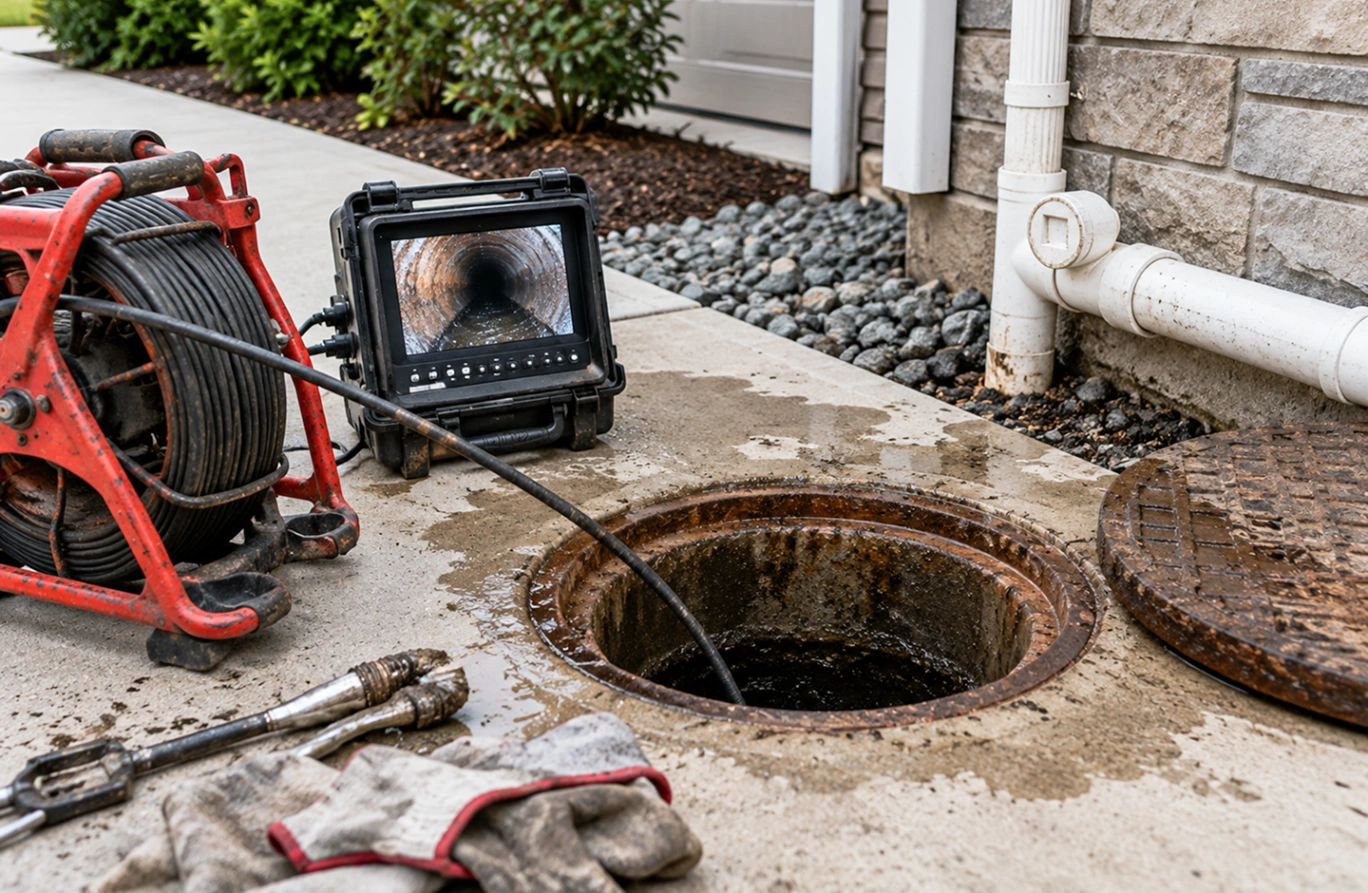
From there, leak detection is symptom, access, and elimination. Where the moisture actually reads, what runs through that section of the house, what the pipe is made of, and where fittings and joints sit. Some leaks are located precisely and quickly. Others sit in a position where specialist locating equipment is the sensible next step, and when that is the case we say so rather than opening speculative holes in your ceiling.

Fixing What |We Find|
Spot Repair
A single failed joint or a damaged section in an otherwise sound pipe is a straightforward pipe leak repair, and that is the whole job. We cut back to a good pipe, make the repair, pressure it, and confirm the meter has stopped moving before we leave.
When One Pinhole Means More
A pinhole in copper on aggressive water is a warning about the whole system, not an isolated fault. If the water has thinned one section from the inside, it has been doing the same to the rest. We will repair the one in front of us and tell you plainly what the rest of the run looks like, so any decision about repiping and pipe repair is yours to make with real information.
If water is actively coming into the house right now, shut the main off and call. This is emergency plumbing, and the sooner the water stops the smaller the repair.
What a Leak |Call Involves|
What Drives the Cost
Access, mostly. A leak at an accessible joint in a crawl space is a short job. One under a finished floor, behind tile, or in a slab takes longer to locate and longer to reach, and restoring the surface afterward is its own consideration. Whether the pipe leak repair is a single fitting or a section of run matters too.
We give you the number after we have located it, because quoting a repair before you know where it is would be a guess dressed up as a price.
What Comes With the Repair
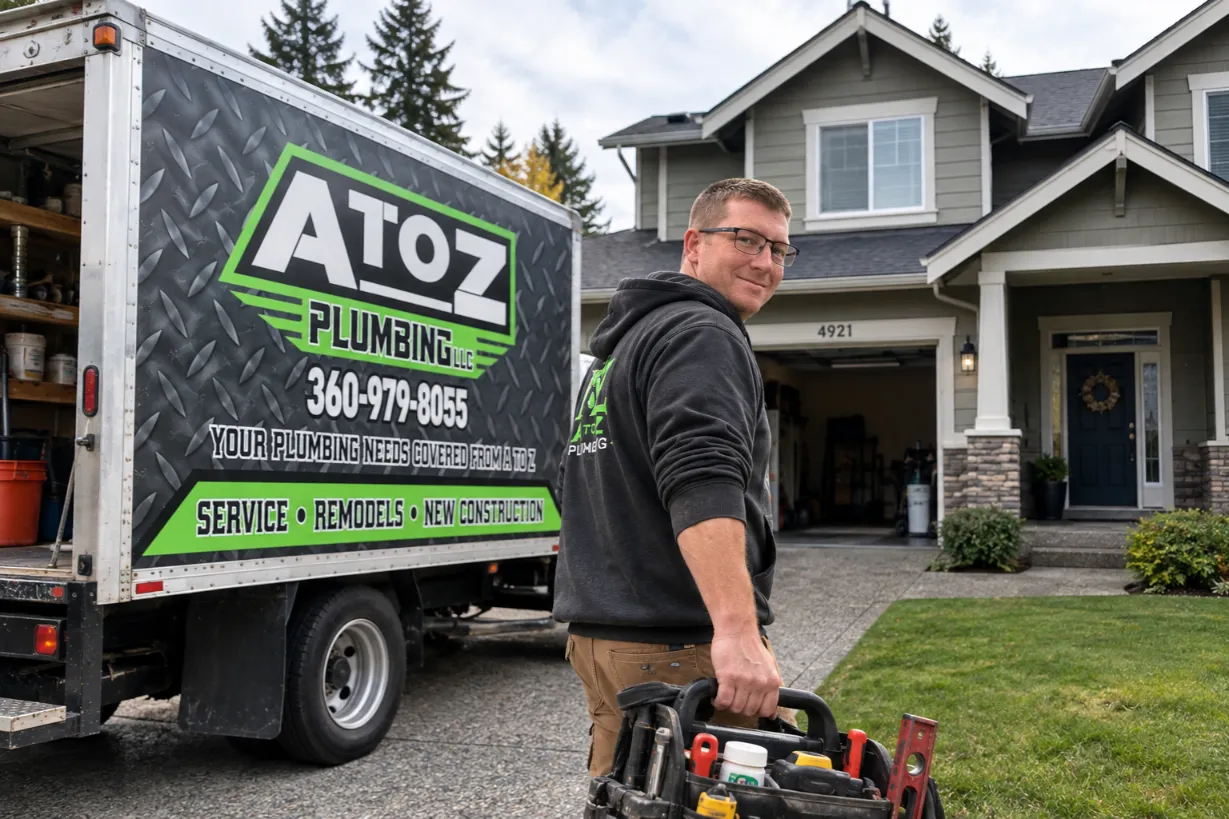
A full year on parts and labor, the meter re-checked before we leave, and the area left clean. Alex is based on the peninsula, so a call in Silverdale, Port Orchard, Poulsbo, Gig Harbor, or Belfair is a drive rather than a crossing. Current deals are listed separately and come off the quote wherever they apply.
What Kitsap Says: "Wish We'd Found You Sooner"
See what homeowners around Kitsap have to say about working with Alex and the A to Z team.

A to Z plumbing is by far the best plumbing company out there. They are so fast to respond to your issues. They are reasonably priced and won’t charge you for things you don’t need. 100% recommend.

August 23, 2023

Alex and Michael have done outstanding work on three different plumbing issues. They respond quickly to scheduling work, show up on time, and work efficiently. They are very knowledgeable about each issue I presented. They quote pricing up front so there are no surprises. They are fair in their pricing. They are friendly and always leave a clean work area. I would highly recommend A to Z Plumbing. I know we will ALWAYS call them for any plumbing needs.
July 17, 2024
Great customer service, quality workmanship and Alex is just a great guy to work with.
August 8, 2026
My husband and I are very pleased with Alex’s work. He is very professional and trustworthy We enjoyed working with him. We will definitely use him again and be happy to refer him and his company to anyone looking for a reliable and service-oriented plumber!
September 9, 2025
Alex and Tanner were amazing! We had an interesting, and I would say challenging, situation that needed to be addressed in several ways. They were both professional and competent. Alex returned messages and calls promptly, and addressed all the hiccups we encountered quickly. He is a kind and honorable person – we are SO glad we called A to Z plumbing, and will absolutely call them for all our plumbing needs!
September 9, 2025
10/10 Would recommend. A to Z plumbing came out to repair a busted water main for me as an emergency service. Alex and his team arrived within 15 minutes of my emergency and remained cool, calm and collected. They worked together to solve the problem quickly and efficiently. They were knowledgeable and professional from start to finish. I couldn’t be happier with their service and I will be using them again for future plumbing related services. A to Z plumbing had clear pricing that was consistent with their industry. If you want something done right, don”t do it yourself. Just call A to Z plumbing and enjoy your peace of mind.
March 9, 2026


Questions Homeowners Ask Before We Come Out
Is a small drip worth fixing straight away?
Yes, and not mainly because of the water. A slow leak that nobody addresses spends months wetting framing, insulation, and drywall, and the repair bill is driven by that damage rather than by the pipe. The pipe is usually the cheapest part of the whole thing.
Do you have to cut into the wall to find a leak?
Not as a starting point. The meter test, isolating sections, and reading moisture all happen before anything is opened. Cutting is a last step at a located spot, not a search method, and the difference between those two approaches is most of what you are paying for.
Will my insurance cover a water leak?
It varies by policy, so read yours or ask your agent. As a general pattern, policies often cover sudden and accidental water damage while excluding the failed component itself, and damage from a leak that went on gradually is frequently excluded too. That last point is the practical argument for acting on a suspected leak early. We are plumbers rather than insurance advisers, so treat this as background and confirm with your insurer.
Why does my copper keep developing pinholes?
Almost always the water rather than the pipe. Naturally acidic, low-alkalinity well water attacks copper from the inside, and once it has thinned one spot it has been working on the rest of the system just as long. Treating the water is what stops the pattern; replacing the pipe without addressing the chemistry restarts the clock.
Can you find a leak under a concrete slab?
We can work toward locating one, and the first steps are the same: confirm the loss at the meter, isolate the section, and read what the symptoms show. Slab leaks are the case most likely to need specialist locating equipment, and if that is where yours lands we will tell you rather than guess at a spot in your floor.
How long does leak detection take?
An obvious leak at an accessible fitting can be found and fixed in one visit. A hidden leak with no visible symptom takes longer, because the process is elimination rather than inspection. Running the meter test before we arrive genuinely shortens it.